When patching stops making sense

Repiping, when one more repair isn’t the right answer

Repeated pinhole leaks, low pressure across the house, or supply lines from an era of known problems: sometimes the honest answer is replacing the lines themselves, not patching the same section again.

  • Whole-house or targeted sections
  • Serving Weston and South Florida
  • PEX and copper, matched to the job

How do I know if I need a repipe instead of another repair?

Two patterns usually point at repiping over another spot repair: leaks that keep appearing in different places along the same run, suggesting the pipe material itself is failing rather than one bad fitting, and a documented history of polybutylene pipe, which was used in some homes built before the mid-1990s and is now widely considered prone to failure at its fittings regardless of visible condition. A single leak, even a bad one, usually doesn’t justify a full repipe on its own.

We’ll tell you plainly which category a given problem falls into. A repipe is a bigger job, and we don’t recommend one unless the pattern of failures actually supports it over another round of targeted repair. When it is warranted, we’ll walk through PEX versus copper, whole-house versus a targeted section, and a realistic timeline before any work is scheduled.

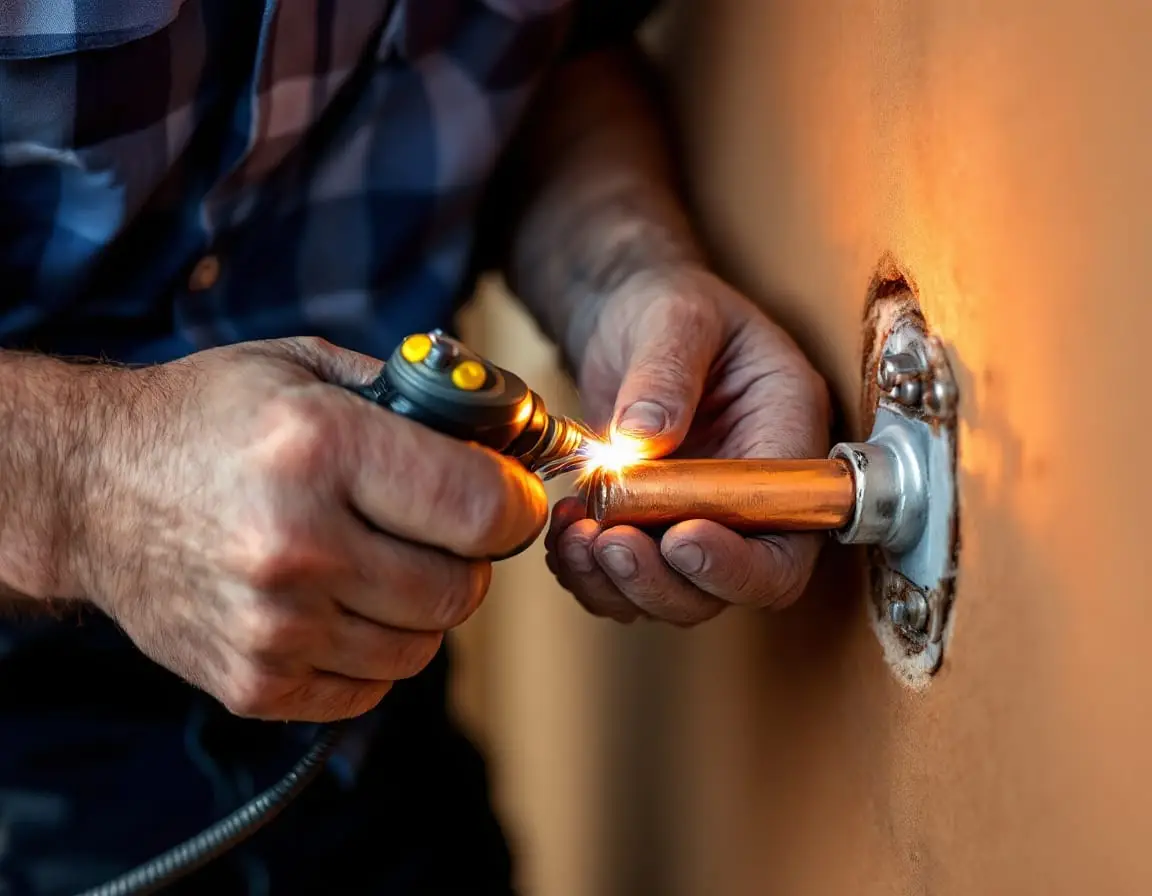
What points at repiping

Signs worth a real look

  • Pinhole leaks in more than one spot

    The clearest sign the pipe material itself is aging out, not just one weak fitting.

  • Water pressure that’s dropped across the whole house

    Can point at internal corrosion or scale narrowing supply lines generally, rather than one blocked fixture.

  • Known polybutylene pipe on the property

    A material used in some homes before the mid-1990s, now widely considered a liability regardless of current condition.

  • Discolored water from multiple fixtures

    Suggests internal pipe corrosion affecting the supply broadly, not a single fixture issue.

Tile-roofed homes along a landscaped lake in a Weston, Florida planned community

Weston, specifically

Where repiping actually comes up in Weston

Weston’s newer housing stock means repiping here looks different than in an older South Florida city.

Mostly a fittings and fixtures story, not pipe material

Most Weston homes were built from the mid-1990s onward with copper or CPVC supply lines, which age far better than the galvanized pipe common in older South Florida cities, so a full repipe is a less frequent recommendation here than in an older neighborhood.

Polybutylene in the earliest-built sections

A small number of Weston’s earliest sections, built right at the edge of when polybutylene was still in use, are the exception worth checking, particularly if the home has had unexplained leaks at fittings.

HOA approval for visible exterior work

If a repipe involves relocating an outdoor hose bib or hydrant line, some Weston HOAs require notice or approval before the work, worth raising when scheduling.

From the neighborhood

Real reviews, real jobs

Pulled directly from our Google Business Profile.

5.011 Google reviews

Read straight from the Google Business Profile on August 30, 2026. Counted, not estimated.

Open the Google profile
  • Frederick HoltAugust 2026

    Water stains on a corroding pipe fitting in a utility area. The plumbers repaired the fitting and tested the connections to the neighbours. We were happy that the problem was repaired cleanly.

  • Seth SpencerAugust 2026

    After a big storm, our basement floor drain stopped working right. The plumber got rid of the blockage and checked the drainage lines around it. Water no longer pools on the floor but quickly flows through the drain.

    Owner replied

  • Franco MotaAugust 2026

    Over the weekend, our main drain clogged, therefore we were in a hurry for assistance. Without damaging the surrounding environment, the plumber came with the necessary tools and removed the obstruction. …

    Owner replied

Questions we get

Before you call

How do I find out if my home has polybutylene pipe?

Often it’s identifiable by a gray plastic pipe with stamped markings, usually visible where a line enters the water heater or under a sink. We can confirm it during an inspection.

Does a repipe mean opening up every wall?

Not always. Depending on the home’s layout, PEX lines can often be run through existing chases and attic space with limited wall access, which we’ll assess before quoting.

PEX or copper, which do you recommend?

Both are solid choices. PEX is more flexible to install and resists the pinhole leaks copper can develop over decades; copper has a longer track record. We’ll walk through the tradeoffs for your specific home.

Can I stay in the house during a repipe?

Usually, yes, though water will be off in sections at a time as the work progresses, and we’ll coordinate the schedule with you in advance.

Is a partial repipe ever the right call instead of the whole house?

Yes, if the failures are concentrated in one section, like an addition or a specific bathroom, replacing just that run can be the more sensible fix.

Leaks showing up in more than one place?

Let’s find out if it’s the pipe itself

An honest look at the pattern first, then a real recommendation, repipe or repair.

Serving Weston and South Florida, 24 hours a day.

A quiet lakeside street of tile-roofed homes in a Weston, Florida planned community at golden hour
(954) 703-4285